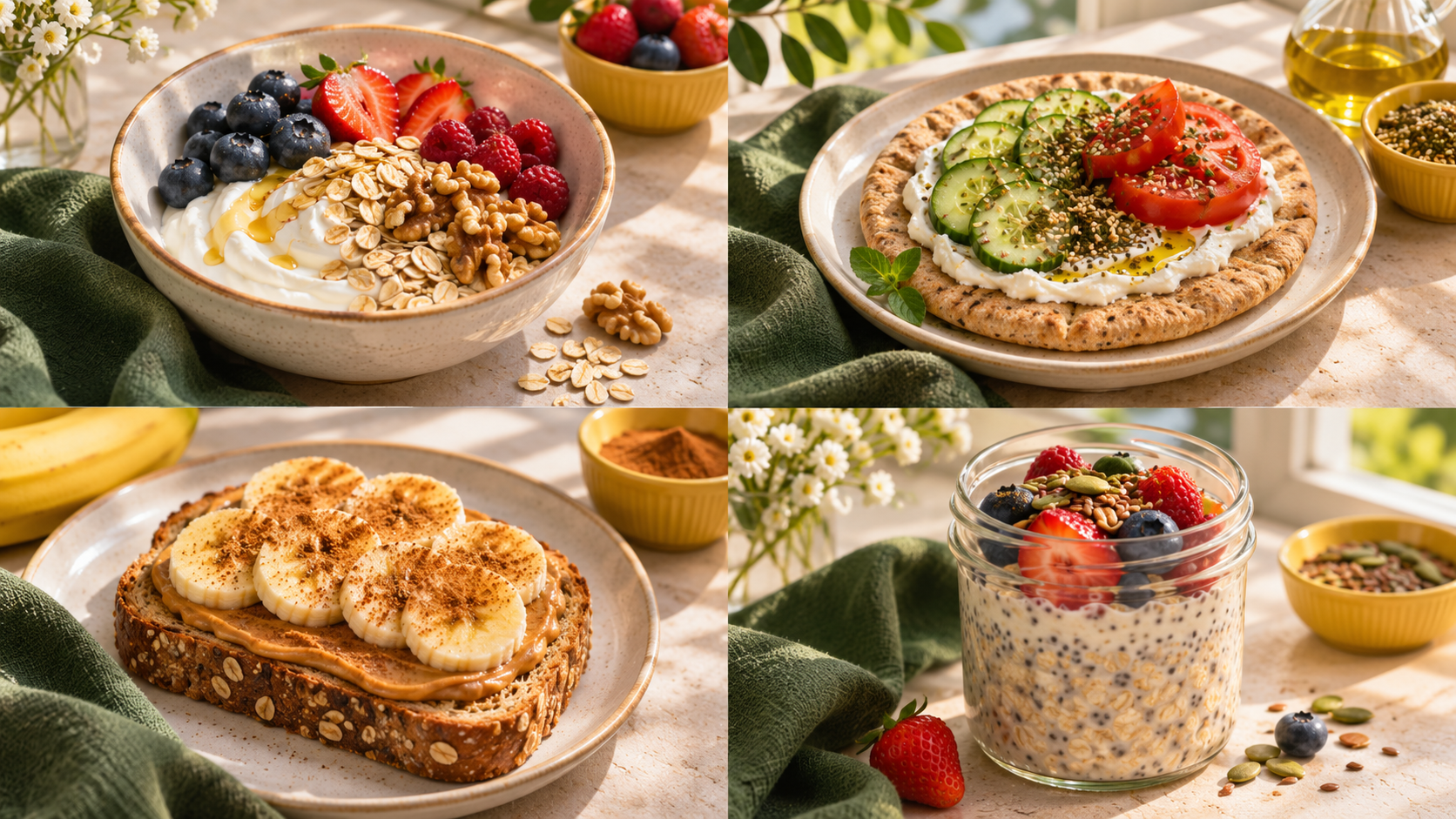
Breakfast needs are personal. Some people wake up hungry; others prefer to eat later. The goal is not to follow a rigid morning rule, but to have quick options ready when breakfast supports your schedule, energy, or concentration.
A simple three-part formula
When possible, combine three elements. This often creates a more satisfying meal than relying on a sweet drink or refined snack alone.
Eight breakfasts in five minutes
1. Yogurt crunch bowl
Plain Greek yogurt or fortified soy yogurt + berries or sliced banana + oats or low-sugar granola + walnuts.
2. Labneh pita plate
Whole-grain pita + labneh + cucumber and tomato + za’atar and a light drizzle of olive oil.
3. Peanut-butter banana toast
Whole-grain toast + peanut or almond butter + banana slices + cinnamon. Add milk or yogurt if you want more protein.
4. Overnight oats
Use a jar prepared the night before with oats, milk, yogurt, chia seeds, and fruit. In the morning, stir and eat.
5. Fast egg wrap
A microwaved or pre-cooked egg + whole-wheat tortilla + spinach + salsa. Roll it up for a portable breakfast.
6. Hummus breakfast toast
Whole-grain toast + hummus + sliced cucumber, tomato, or leftover roasted vegetables + sesame seeds.
7. Cottage-cheese fruit bowl
Cottage cheese + peaches, berries, or pear + nuts or seeds. Choose a savory version with tomato, pepper, and herbs.
8. Emergency grab-and-go
A piece of fruit + a cheese stick or yogurt + a small handful of nuts. Simple still counts.
Make mornings easier before they begin
- Keep two dependable breakfasts in regular rotation.
- Place fruit, yogurt, and other ready-to-eat foods where they are easy to see.
- Boil eggs or portion nuts at the beginning of the week.
- Freeze bread, pita, or tortillas so a useful base is always available.
- Prepare two or three jars of overnight oats at once.
- Use leftovers: roasted vegetables, beans, chicken, or rice can become a savory breakfast.
How to adjust for your goals
If your breakfast does not keep you satisfied, add protein, fiber, or enough total food. For higher activity needs, include a larger carbohydrate source or an additional snack. For a smaller appetite, choose a compact option such as yogurt with nuts or toast with an egg.
If you manage diabetes, food allergies, celiac disease, kidney disease, digestive symptoms, or another medical condition, breakfast choices may need individual adjustment with your clinician or qualified nutrition professional.
The bottom line
A useful breakfast is one you can prepare, enjoy, and repeat. Start with a simple combination of protein and a fiber-rich food, add flavor, and keep a backup option available for the mornings when five minutes feels like a luxury.